



Sodium Channel
Na channels; Na+ channels
Sodium channels are integral membrane proteins that form ion channels, conducting sodium ions (Na+) through a cell's plasma membrane. They are classified according to the trigger that opens the channel for such ions, i.e. either a voltage-change (Voltage-gated, voltage-sensitive, or voltage-dependent sodium channel also called VGSCs or Nav channel) or a binding of a substance (a ligand) to the channel (ligand-gated sodium channels). In excitable cells such as neurons, myocytes, and certain types of glia, sodium channels are responsible for the rising phase of action potentials. Voltage-gated Na+ channels can exist in any of three distinct states: deactivated (closed), activated (open), or inactivated (closed). Ligand-gated sodium channels are activated by binding of a ligand instead of a change in membrane potential.
Sodium Channel Isoform Specific Products
-
Sodium Channel
(632)
View all products
-
Nav1.1
(12)
View all products
-
Nav1.2
(18)
View all products
-
Nav1.3
(16)
View all products
-
Nav1.4
(16)
View all products
-
Nav1.5
(27)
View all products
-
Nav1.6
(13)
View all products
-
Nav1.7
(63)
View all products
-
Nav1.8
(43)
View all products
-
Nav1.9
(3)
View all products
All Product Categories
-
Sodium Channel Inhibitors
(635)
View all products
-
Sodium Channel Agonists
(10)
View all products
-
Sodium Channel Antagonists
(29)
View all products
-
Sodium Channel Activators
(35)
View all products
-
Sodium Channel Modulators
(30)
View all products
-
Sodium Channel Controls
(5)
View all products
-
Sodium Channel Ligands
(3)
View all products
-
Sodium Channel Related Products (817)
Related Products (817)

-
Antibodies (9)
-
Related Compound Screening Libraries (1)
-
Sodium Channel Isoform Comparison
-
(R)-Duloxetine
 0 ImagesCat. No.: HY-B0161CCAS No.: 116539-60-7Synonyms: (R)-LY248686(R)-Duloxetine ((R)-LY248686) is a neuronal voltage-gated sodium channel blocker with analgesic activity. (R)-Duloxetine blocks Na+ currents with higher affinity for the inactivated state than for the resting state. (R)-Duloxetine alleviates postoperative mechanical allodynia and hyperalgesia. (R)-Duloxetine exerts its effects through a local peripheral mechanism of action. (R)-Duloxetine can be used for research on postoperative (post-incisional) pain.
-
Diphenidol hydrochloride (Standard)
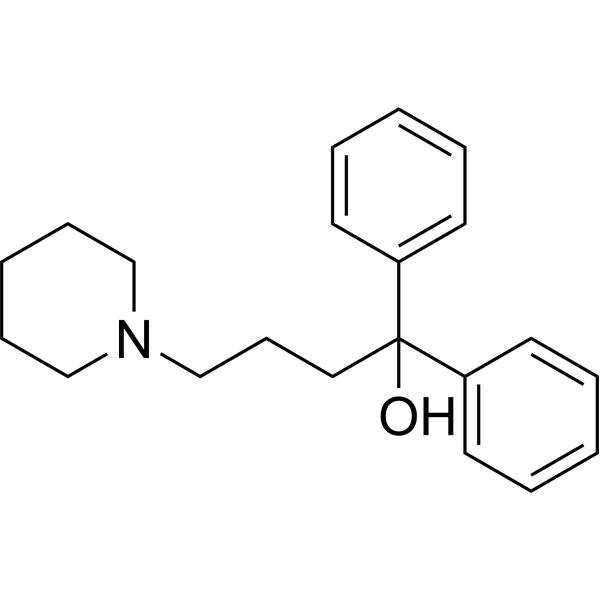
 0 ImagesDiphenidol (hydrochloride) (Standard) is the analytical standard of Diphenidol (hydrochloride). This product is intended for research and analytical applications. Diphenidol hydrochloride (Difenidol hydrochloride) is a non-selective muscarinic M1-M4 receptor antagonist, has anti-arrhythmic activity. Diphenidol hydrochloride is also a potent non-specific blocker of voltage-gated ion channels (Na+, K+, and Ca2+) in neuronal cells. Diphenidol hydrochloride can be used in the study of antivertigo and antinausea[4].
-
Anti-SLC34A2 (Lifastuzumab)-McMMAF
 0 ImagesCat. No.: HY-171737Anti-SLC34A2 (Lifastuzumab)-McMMAF is an antibody-drug conjugate (ADC) consisting of the humanized anti-SLC34A2 (sodium-dependent phosphate transporter 2) antibody Lifastuzumab (HY-P99970) conjugated to the protective group maleimidocaproyl and the tubulin inhibitor MMAF (HY-15579). The ADC toxic molecule and linker part McMMAF (HY-15578). Anti-SLC34A2 (Lifastuzumab)-McMMAF induces apoptosis and can be used in cancer research.
-
AN-132 phosphate
 0 ImagesCat. No.: HY-106819ACAS No.: 105668-70-0AN-132 phosphate is an antiarrhythmic agent. AN-132 phosphate can inhibit Sodium Channel. AN-132 phosphate can prolong atrioventricular conduction time, decrease sinus rate and reduce the force of papillary muscle contraction. AN-132 phosphate can be used for the research of cardiovascular disease.
-
Pilsicainide
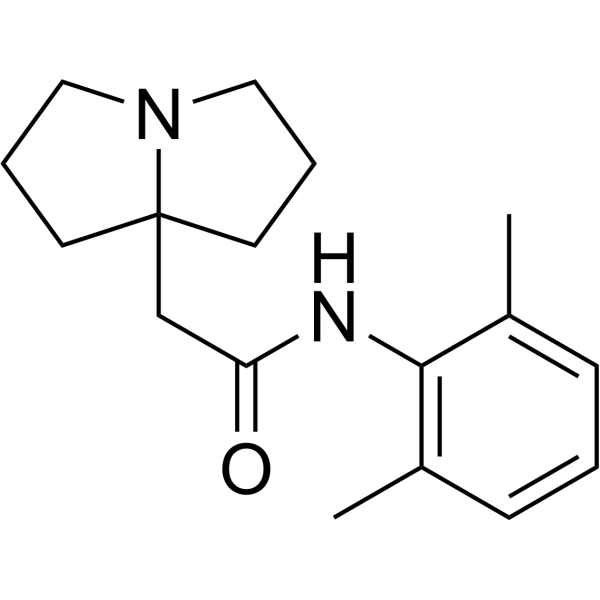 0 ImagesCat. No.: HY-133715CAS No.: 88069-67-4Synonyms: SUN 1165 free base; PilzicainidePilsicainide (SUN 1165 free acid) is a potent sodium channel blocker and potent class Ic antiarrhythmic agent.
-
Nav1.8-IN-24
 0 ImagesCat. No.: HY-183709Nav1.8-IN-24 is a voltage-gated sodium channel Nav1.8 inhibitor with pIC50 values of 7.4 (resting state) and 7.5 (inactivated state), and it exhibits high selectivity for NaV1.1-1.7 subtypes. Nav1.8-IN-24 possesses in vitro safety and drug interaction profiles. Nav1.8-IN-24 can be used for the research of acute pain and chronic neuropathic pain.
-
Benzamil
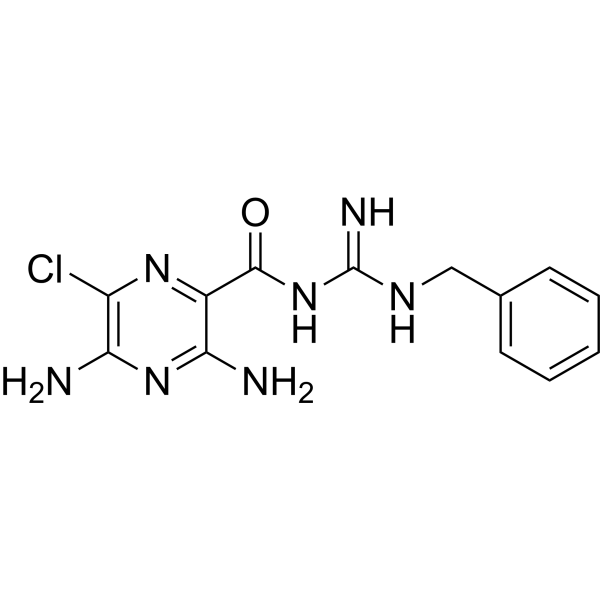 0 ImagesBenzamil (Benzylamiloride), an Amiloride analogue, is a Na+/Ca2+ exchanger (NCX) inhibitor (IC50~100 nM). Benzamil also is a non-selective Deg/epithelial sodium channels (ENaC) blocker, and can potentiate myogenic vasoconstriction. Benzamil inhibits TRPP3-mediated Ca2+-activated currents, with an IC50 of 1.1 μM.
-
Ipidacrine hydrochloride
 0 ImagesCat. No.: HY-19689CAS No.: 90043-86-0Synonyms: NIK-247; AmiridineIpidacrine (NIK-247; Amiridine) hydrochloride is orally active and blood-brain-barrier-penetrant AChE and BuChE inhibitors with IC50 values of 1 μM and 1.9 μM, respectively, which is also a partial agonist of M2-cholinergic receptors and a reversible cholinesterase inhibitor. Ipidacrine hydrochloride has a stimulating effect on neuromuscular transmission and excitation along the nerve fibres with a moderately anti-pain effect. Ipidacrine hydrochloride is an aminopyridines and is structurally similar to Tacrine (HY-111338). Ipidacrine hydrochloride is effective in various amnesia models, improves erectile function and inhibits K+ and Na+-channels in the neuronal membrane in diabetic rats. Ipidacrine hydrochloride is promising for research of Alzheimer’s disease, ischaemic stroke, idiopathic neuropathy of the facial nerve, diabetes mellitus-induced erectile dysfunction and other deficits in central or peripheral cholinergic deseases.
-
(±)-Indoxacarb (Standard)
 0 ImagesSynonyms: (RS)-Indoxacarb (Standard); DPX-JW062 (Standard)(±)-Indoxacarb (Standard) is the analytical standard of Indoxacarb. This product is intended for research and analytical applications. Indoxacarb ((±)-Indoxacarb; DPX-JW062) is a broad-spectrum oxadiazine insecticide with high insecticidal activity and low mammalian toxicity. Indoxacarb blocks insect sodium channels in nerve preparations and isolated neurons.
-
trans-AzoTAB
 0 ImagesCat. No.: HY-133240CAS No.: 1109241-72-6trans-AzoTAB is a photoresponsive potassium/sodium/calcium channel modulator and DNA-binding agent. trans-AzoTAB undergoes trans-cis isomerization driven by light, with variable polarity and DNA affinity. trans-AzoTAB also enhances voltage-gated potassium currents and inhibits sodium and calcium currents in cardiomyocytes, thereby reducing spontaneous electrical activity and excitation conduction velocity. In addition, trans-AzoTAB induces compaction and frozen conformation of λ-phage DNA, and non-sequence-dependently inhibits transcription and translation processes in the dark; its activity can be reversed and restored by visible light after activation with ultraviolet irradiation. trans-AzoTAB can serve as a probe for two-photon optical regulation of myocardial excitability, and is used to construct photoresponsive interfacial polymer structures.
-
Kurtoxin
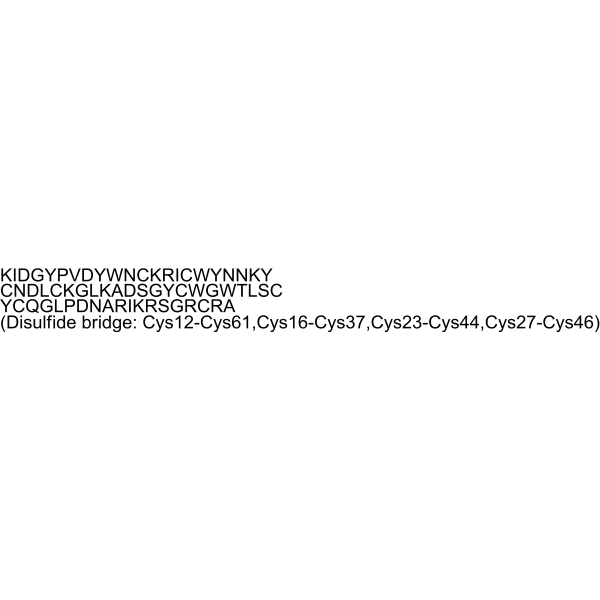 0 ImagesCat. No.: HY-P5869Kurtoxin is a selective Cav3 (T-type) voltage-gated Ca2+ channel gating inhibitor with a Kd of 15 nM for Cav3.1 (α1G T-type) Ca2+ channel. Kurtoxin can interact with high affinity with native neuronal high-threshold L-type, N-type, and P-type Ca2+ channels in central and peripheral neurons. Kurtoxin also shows cross-reactivity with voltage-gated Na+ channel.
-
m3-Huwentoxin IV
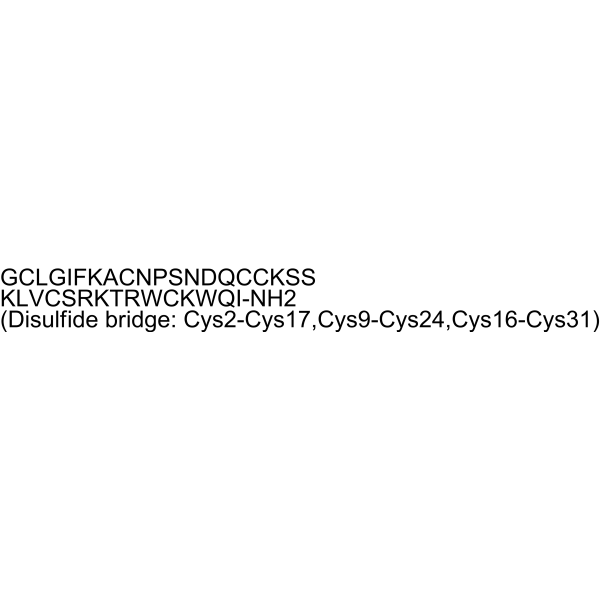 0 ImagesCat. No.: HY-P5900Synonyms: m3-HwTx-IVm3-Huwentoxin IV (m3-HwTx-IV) is a potent NaV inhibitor with IC50s of 3.3, 6.8, 7.2, 8.4, 11.9 and 369 nM against hNaV1.7, hNaV1.6, hNaV1.3, hNaV1.1, hNaV1.2 and hNaV1.4, respectively in QPatch assay. m3-Huwentoxin IV dose-dependently suppresses spontaneous pain induced by the NaV1.7 activator OD1 in a rodent pain model.
-
Benzonatate (Standard)
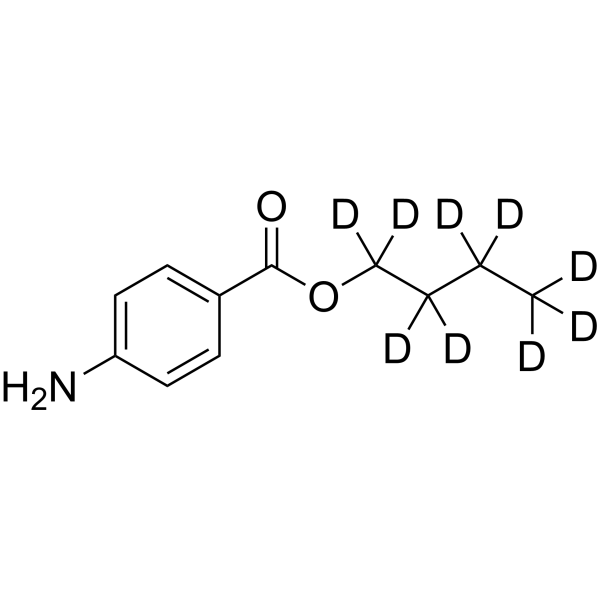
 0 ImagesBenzonatate (Standard) (Benzononatine (Standard)) is the analytical standard of Benzonatate (HY-B155). This product is intended for research and analytical applications. Benzonatate (Benzononatine) is an orally active and non-narcotic peripheral antitussive agent. Benzonatate is a reversible voltage-gated Na+ channels inhibitor. Benzonatate dampens the activity of cough stretch receptors.
-
Detajmium
 0 ImagesCat. No.: HY-115839CAS No.: 47719-70-0Synonyms: Tachmalcor free baseDetajmium (Tachmalcor free base) is a Na?-channel blocker with activity to inhibit ventricular conduction and refractoriness. Detajmium (0.3μM) prolongs intraventricular conduction time comparable to propafenone (0.3μM) during sinus rhythm, but the time constant for reaching steady state during rapid ventricular pacing is significantly longer for Detajmium, indicating a unique temporal profile for its heart rate-dependent effects.
-
Benzonatate (PEGn)
 0 ImagesCat. No.: HY-128418CAS No.: 32760-16-0Benzonatate (PEGn) is a unique non-narcotic antitussive agent that has sodium channel-blocking properties and anesthetic effects on the respiratory stretch receptors.
-
Evenamide hydrochloride
 0 ImagesCat. No.: HY-17612ACAS No.: 1092977-06-4Synonyms: NW-3509 hydrochlorideEvenamide hydrochloride is an orally available voltage-gated sodium channel (VGSC) blocker (Ki=0.4 μM) for the research of schizophrenia. Evenamide hydrochloride shows efficacy in a broad spectrum of rodent models of psychosis, mania, depression, and aggressiveness.
-
Bisaramil
 0 ImagesCat. No.: HY-119092CAS No.: 89194-77-4Bisaramil is an orally active antiarrhythmic agent. Bisaramil exerts concentration dependent inhibitory effect on PMA-stimulated free radical generation and prolonged the time lag concentration dependently.
-
Vinpocetine-d5
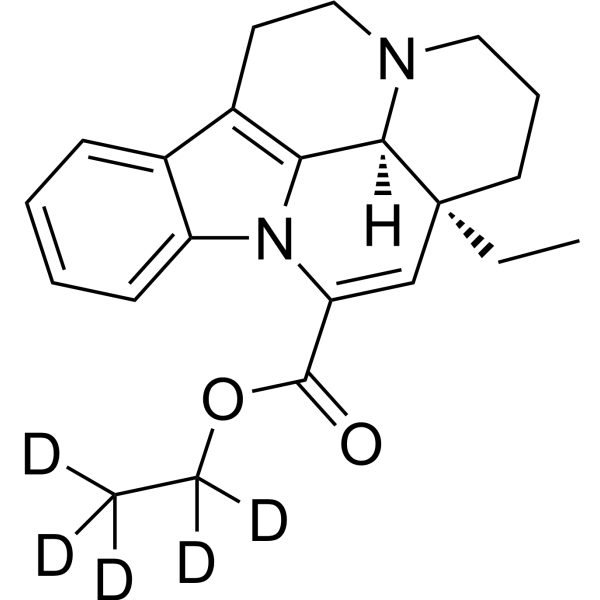 0 ImagesCat. No.: HY-13295SCAS No.: 2734920-39-7Vinpocetine-d5 is the deuterium labeled Vinpocetine. Vinpocetine (Ethyl apovincaminate) is a derivative of the alkaloid Vincamine that blocks voltage-gated Na+ channels. The IC50 value of Vinpocetine on direct IKK inhibition in the cell-free system is 17.17 μM. Vinpocetine is a phosphodiesterase (PDE) inhibitor and inhibits NF-κB-dependent inflammatory responses by directly targeting IκB kinase complex (IKK), and has been widely used for the treatment of cerebrovascular disorders.




